One of the fascinating features of the free market is an almost instant appearance of entrepreneurs to fill a perceived need. Whether it is someone to build a skyscraper, supply illegal drugs, produce a million automobiles or a pornographic Mother's Day card - where there's a market, someone will appear to satisfy it. When the Environmental Protection Agency (EPA) recommend that you "fix the home if the radon level is 4 picocuries per liter or higher," it didn't take long for the "fixers" to step forward. Not just the fixers either; someone had to measure the radon, someone else had to build the instrumentation, others had to process the canisters, and still others had to evaluate the whole process. Soon an entire industry was created - and there is certainly nothing wrong with that. It's what we often term "the American way."
Because of their common interest, some of the parties involved in radon detection and remediation (mostly small businesses) joined together in an organization - the American Association of Radon Scientists and Technologists, Inc. (AARST) - and there certainly isn't anything wrong with that, either. But let us look at a little problem caused by the inherent ability of human beings to rationalize when their personal interests are at stake. Would the four or five hundred members of the AARST applaud an investigation to determine whether residential radon is actually a danger - or that it might possibly be a bio-positive agent for human health? Some probably would, and might then turn their attention to ways to get more radon in the residences, but most - I suspect - would do all in their power to prevent any such investigation.
So here we have a case where a few thousand highly motivated protectors of the status quo might be able to thwart an investigation that could be highly beneficial to hundreds of millions of uninformed - indeed, unaware - citizens. This is the basic reason that science, when politicized, is no longer science at all - but merely an extension of actions that enrich one group at the expense of another.
Showing posts with label radon. Show all posts
Showing posts with label radon. Show all posts
Monday, April 18, 2016

Thursday, March 24, 2016
Before You Spend $4,000 to Shorten Your Life
The observed lung cancer rates of females in high residential radon areas in the former uranium mining areas in Southern Saxony are substantially lower than the population average of East Germany. - Professor Klaus Becker, German Standards Institute
Bernard Cohen, doctor of science and professor emeritus at Pittsburgh University, is a liberal Democrat. [He mentions this in his terrific book, The Nuclear Energy Option, Plenum Press, New York, 1990, p. 269.] I probably would disagree with everything he believes in politically. But Dr. Cohen is also a scientist. He is convinced that the way mankind can continue to raise itself up from our back-breaking labor and mud huts is through increasing our knowledge about the world we live in. And most important, he is convinced this knowledge is objective. We can find truth. It is verifiable. It can stand on its own.
In by far the largest "ecological" study of low-level radiation ever made, Professor Cohen was attempting to refine the Linear No-Threshold theory. But, in his words, "It came as a great shock to me that my data ran contrary to the LNT, and I didn't fully believe it until about 1993 - when I shut off the $1,200 radon reduction system in my home to save electricity." But he was using the scientific method, which is very clear about hypotheses that have been shown to be false: they are stuffed immediately into the trash can.
Under the LNT theory, cancer rate increases with increasing doses of radiation - even at very low exposures. If you are to plot response (cancer) versus dose, you should have a straight line with a positive slope according to this theory that has been sanctified by the regulators and rule writers. Using data from the American Academy of Sciences' Biological Effects of Ionizing Radiation committee (BEIR), the slope of this line should be an increased cancer risk of 4% per gray for chronic radiation and 8% per gray for acute exposure. By knowing the "whole body" dose given by various radon concentrations, this slope can also be expressed in terms of lung cancer mortality (since that is the only place in the body where significant radon progeny reside) per picocurie per liter of air.The value of this prediction for men, without any consideration of smoking, is 4.5 deaths per 10,000 men per year for each pCi/l increase in airborne radon. Remember this figure.
Cohen's initial study took five years, cost millions of dollars, and accumulated data from homes in 1,729 counties, comprising about 90% of the U.S. population. [Because so many retirees move to California, Florida and Arizona, these data were deleted, reducing the number of counties to 1,601. This deletion, incidentally, had an insignificant effect on the results.] It considered radon data from the EPA, state agencies, and 272,000 measurements made by the University of Pittsburgh. Census data on smoking, rural-urban balance, occupations, education, housing, medical care - a total of fifty-four socioeconomic "confounding" factors (alone and in combinations with each other) were analyzed to determine if and how they affected the lung cancer rate.
The study found - as you may now suspect - a discrepancy between the LNT's prediction of lung cancer and the actual data. This has since been known as "our discrepancy," and Cohen has invited his colleagues to try to find a confounder that would explain it. He notes that unless someone can come up with a reason to put aside "our discrepancy," the LNT must be considered a false and unacceptable theory and discarded as a source for use in regulatory authority. With more than 500 of the suspected confounders and combinations thereof already eliminated, it does not look good for the LNT advocates - most of whom do not address "our discrepancy" but prefer to snub Dr. Cohen as a mere physicist, and not an epidemiologist. (Critics overlook that G.A. Colditz is a world-class epidemiologist and was co-author with Cohen on "Tests of the linear-no-threshold theory for lung cancer induced by exposure to radon" in Environmental Research, 64, 1994.)

Figure 33 is typical of the curves plotted from the University of Pittsburgh data and is one of four similar figures in the report - this one is for males without smoking's begin taken into account. The others are for males with smoking taken into consideration, and similar data on females both considering and not considering smoking. [These are available from his paper, Test of the Linear-No-Threshold Theory of Radiation Carcinogenesis for Inhaled Radon Decay Products," Health Physics, February 1995. All curves give a similar negative correlation between radon and cancer through 6 pCi/l.]
I have deleted the error bars and the "first and third quartile" curves because I don't think they'd mean much to the average reader. Cohen also had indicators of the numbers of counties for each data point on his curves ranging from 4 to 216 with an average of 88.9. These are counties, bear in mind, not individuals.
Remember the increase by 4.5 deaths per pCi/l predicted by the LNT? That is shown graphically by the dashed line on Figure 33. The solid line with a negative slope is the best fit of the collected data. It shows a minus 4.7 deaths per pCi/l. If some hypothetical man (recall our graph is of male data) had a choice between being exposed to, say, 6 pCi of radon in his house, or being exposed to none, what is the significance of this choice? By sealing his house and spending some $3,000 to $4,000 for the government-recommended heat exchangers, he could increase his risk of lung cancer by 7.5%.
Perhaps that doesn't sound like much to you (especially if we're not talking about your lungs), but it is a huge increase in risk compared even with the LNTer's worst chortlings. You may recall the BEIR statistic for chronic radiation exposure predicts an increase in risk of cancer mortality of 8% for exposure to 2 gray, which is 200 cGy or 200,000 mrem. This is far above the risk experienced by all but a small fraction of A-bomb survivors! So if you missed Hiroshima and Nagasaki, just hang in there with the EPA recommendation on radon. They'll help you reach that goal of a significant increase in cancer risk!
I like the way Jay Lehr summed up Cohen's results in an article, "Good News About Radon: The Linear Nonthreshold Model is Wrong":
"Thus, in spite of extensive efforts to find a flaw in the obvious results indicated by the observed data, no potential explanation for the discrepancy between theory and reality could be found. It therefore appears that the linear no-threshold theory for carcinogenesis from inhaled radon decay products is invalid. This is indeed good news."
It would have been even better news if more people knew about it.
[Dr. Lehr is a senior scientist with Environmental Education Enterprises, a provider of high-technology short courses for environmental professionals.]
Bernard Cohen, doctor of science and professor emeritus at Pittsburgh University, is a liberal Democrat. [He mentions this in his terrific book, The Nuclear Energy Option, Plenum Press, New York, 1990, p. 269.] I probably would disagree with everything he believes in politically. But Dr. Cohen is also a scientist. He is convinced that the way mankind can continue to raise itself up from our back-breaking labor and mud huts is through increasing our knowledge about the world we live in. And most important, he is convinced this knowledge is objective. We can find truth. It is verifiable. It can stand on its own.
In by far the largest "ecological" study of low-level radiation ever made, Professor Cohen was attempting to refine the Linear No-Threshold theory. But, in his words, "It came as a great shock to me that my data ran contrary to the LNT, and I didn't fully believe it until about 1993 - when I shut off the $1,200 radon reduction system in my home to save electricity." But he was using the scientific method, which is very clear about hypotheses that have been shown to be false: they are stuffed immediately into the trash can.
Under the LNT theory, cancer rate increases with increasing doses of radiation - even at very low exposures. If you are to plot response (cancer) versus dose, you should have a straight line with a positive slope according to this theory that has been sanctified by the regulators and rule writers. Using data from the American Academy of Sciences' Biological Effects of Ionizing Radiation committee (BEIR), the slope of this line should be an increased cancer risk of 4% per gray for chronic radiation and 8% per gray for acute exposure. By knowing the "whole body" dose given by various radon concentrations, this slope can also be expressed in terms of lung cancer mortality (since that is the only place in the body where significant radon progeny reside) per picocurie per liter of air.The value of this prediction for men, without any consideration of smoking, is 4.5 deaths per 10,000 men per year for each pCi/l increase in airborne radon. Remember this figure.
Cohen's initial study took five years, cost millions of dollars, and accumulated data from homes in 1,729 counties, comprising about 90% of the U.S. population. [Because so many retirees move to California, Florida and Arizona, these data were deleted, reducing the number of counties to 1,601. This deletion, incidentally, had an insignificant effect on the results.] It considered radon data from the EPA, state agencies, and 272,000 measurements made by the University of Pittsburgh. Census data on smoking, rural-urban balance, occupations, education, housing, medical care - a total of fifty-four socioeconomic "confounding" factors (alone and in combinations with each other) were analyzed to determine if and how they affected the lung cancer rate.
The study found - as you may now suspect - a discrepancy between the LNT's prediction of lung cancer and the actual data. This has since been known as "our discrepancy," and Cohen has invited his colleagues to try to find a confounder that would explain it. He notes that unless someone can come up with a reason to put aside "our discrepancy," the LNT must be considered a false and unacceptable theory and discarded as a source for use in regulatory authority. With more than 500 of the suspected confounders and combinations thereof already eliminated, it does not look good for the LNT advocates - most of whom do not address "our discrepancy" but prefer to snub Dr. Cohen as a mere physicist, and not an epidemiologist. (Critics overlook that G.A. Colditz is a world-class epidemiologist and was co-author with Cohen on "Tests of the linear-no-threshold theory for lung cancer induced by exposure to radon" in Environmental Research, 64, 1994.)

Note and source for Figure 33: Effect of Residential Radon Levels on Lung Cancer - Each data point represents an average of eighty-nine U.S. counties. Source: Cohen, B.L. Test of the linear-no-threshold theory of radiation carcinogenesis for inhaled radon decay products. Health Physics, 68, 157, 1995.
Figure 33 is typical of the curves plotted from the University of Pittsburgh data and is one of four similar figures in the report - this one is for males without smoking's begin taken into account. The others are for males with smoking taken into consideration, and similar data on females both considering and not considering smoking. [These are available from his paper, Test of the Linear-No-Threshold Theory of Radiation Carcinogenesis for Inhaled Radon Decay Products," Health Physics, February 1995. All curves give a similar negative correlation between radon and cancer through 6 pCi/l.]
I have deleted the error bars and the "first and third quartile" curves because I don't think they'd mean much to the average reader. Cohen also had indicators of the numbers of counties for each data point on his curves ranging from 4 to 216 with an average of 88.9. These are counties, bear in mind, not individuals.
Remember the increase by 4.5 deaths per pCi/l predicted by the LNT? That is shown graphically by the dashed line on Figure 33. The solid line with a negative slope is the best fit of the collected data. It shows a minus 4.7 deaths per pCi/l. If some hypothetical man (recall our graph is of male data) had a choice between being exposed to, say, 6 pCi of radon in his house, or being exposed to none, what is the significance of this choice? By sealing his house and spending some $3,000 to $4,000 for the government-recommended heat exchangers, he could increase his risk of lung cancer by 7.5%.
Perhaps that doesn't sound like much to you (especially if we're not talking about your lungs), but it is a huge increase in risk compared even with the LNTer's worst chortlings. You may recall the BEIR statistic for chronic radiation exposure predicts an increase in risk of cancer mortality of 8% for exposure to 2 gray, which is 200 cGy or 200,000 mrem. This is far above the risk experienced by all but a small fraction of A-bomb survivors! So if you missed Hiroshima and Nagasaki, just hang in there with the EPA recommendation on radon. They'll help you reach that goal of a significant increase in cancer risk!
I like the way Jay Lehr summed up Cohen's results in an article, "Good News About Radon: The Linear Nonthreshold Model is Wrong":
"Thus, in spite of extensive efforts to find a flaw in the obvious results indicated by the observed data, no potential explanation for the discrepancy between theory and reality could be found. It therefore appears that the linear no-threshold theory for carcinogenesis from inhaled radon decay products is invalid. This is indeed good news."
It would have been even better news if more people knew about it.
[Dr. Lehr is a senior scientist with Environmental Education Enterprises, a provider of high-technology short courses for environmental professionals.]
Saturday, March 12, 2016
United States (again)
"Studies of populations chronically exposed to low-level radiation, such as those residing in regions of elevated natural radiation, have not shown consistent or conclusive evidence of an associated increase in the risk of cancer." [This statement conflicts with the conclusions of the report.] [From the Executive Summary, Carcinogenic Effects. Biological Effects of Ionizing Radiation Committee (BEIR) of the National Academy of Science, Report V, 1990, p. 5.
In a study of 900,000 U.S. residents with various levels of radium in water supplies, the BEIR was confounded by finding more bone cancer in Chicago - with only 1 mBq/l - than in the areas where the level exceeded 110 mBq/l. [From BEIR IV, Health Risks of Radon and Other Deposited Alpha Emitters, National Academy Press, Washington, D.C., 1988.]
A multivariant examination of forty-three urban populations of the United States showed a statistically significant negative correlation [more radiation, less cancer] between total cancer mortality and background levels of ionizing radiation. [Hickey, R.J., et al. Low level ionizing radiation and human mortality; multi-regional epidemiological studies. Health Physics, 40, 625, 1981.]
Monday, March 7, 2016
Japan
Spring waters have often been found to have significant amounts of dissolved radon. This seems particularly true at springs that are considered "health spas," such as Bad Gastein in Austria, where the activity from radon and its progeny reaches 16,200 pCi/l - a mere 73,600% higher than the "contaminated milk" of such great concern to the media at Three Mile Island. A case in point are the radon springs at Misasa, Japan, where Mifune et al. [Mifune, M., et al. Cancer mortality survey in a spa area (Misasa, Japan) with a high radon background. Japan Journal of Cancer Research, 83, 1, 1992], investigated the prevalence of cancer mortality in Misasa versus that in the nearby town of Beppu Spring, a village with minimal waterborne radon. Also, used as a control, were the Standard Mortality Ratios for all Japan. Data were collected during the period 1952-88.

Stomach cancer mortality is singled out and plotted in Figure 24, since it might be expected from ingesting radon in the water. Obviously there is a significant negative correlation between radon exposure and cancer - in conflict with the LNT and in good agreement with hormesis expectations.
One unusual feature of the data concerns female responses. Often the observed beneficial effect of radiation is less in females than in males. The Misasa data, however, indicate SMRs for colon/rectum and lung cancer that are signficantly lower for women.
Dr. Mifune, regarding a study much like that of Misasa, comments, "Similarly, in one region of Japan with an average indoor level of 35 Bq/m^3, the lung cancer incidence was 51% of that in a low-level radon region (11 Bq/m^3), and the mortality caused by all types of cancers was 37% lower." By the way, to convert Bq/m^3 to pCi/l, you divide by thirty-seven - which means both of the above cited areas have relatively low indoor radon. (Just wait until you see what Bernard Cohen says about all this in chapter 20.)

Caption for Figure 24: Japanese Mortality vs. Radon Prevalence: Mifune, M., Sobue, T., Arimoto, H., Komoto, Y., Kondo, S. and Tanooka, H. Cancer mortality survey in a spa area (Misasa, Japan) with a high radon background. Japan Journal of Cancer Research, 83, 5, 1992.
Stomach cancer mortality is singled out and plotted in Figure 24, since it might be expected from ingesting radon in the water. Obviously there is a significant negative correlation between radon exposure and cancer - in conflict with the LNT and in good agreement with hormesis expectations.
One unusual feature of the data concerns female responses. Often the observed beneficial effect of radiation is less in females than in males. The Misasa data, however, indicate SMRs for colon/rectum and lung cancer that are signficantly lower for women.
Dr. Mifune, regarding a study much like that of Misasa, comments, "Similarly, in one region of Japan with an average indoor level of 35 Bq/m^3, the lung cancer incidence was 51% of that in a low-level radon region (11 Bq/m^3), and the mortality caused by all types of cancers was 37% lower." By the way, to convert Bq/m^3 to pCi/l, you divide by thirty-seven - which means both of the above cited areas have relatively low indoor radon. (Just wait until you see what Bernard Cohen says about all this in chapter 20.)
|
Table 12
|
||
|
Standard Mortality Ratios for Residents of Misasa,
Japan
|
||
|
|
Male
|
Female
|
|
Total
Cancer
|
.538
|
.463
|
|
Stomach
|
.400
|
.452
|
|
Colon/rectum
|
.296
|
.142
|
|
Lung
|
.475
|
.187
|
|
Leukemia
|
.445
|
.534
|
|
Source: Mifune, M. et al. Cancer
mortality survey in a spa area (Misasa, Japan) with a high radon background. Japan Journal of Cancer Research, 83,
1, 1992.
|
||
Wednesday, March 2, 2016
The Most Toxic Substance on Earth?
One of the noisiest guns in the anti-nuclear arsenal has been the cultivated fear of plutonium. "The most toxic substance known to man," so the mantra goes - in complete disregard to toxicity studies showing the element to be about as toxic as caffeine and 1/1,000,000,000,000 the toxicity of botulism toxin. Even in the health physics field, however, there has been a great deal of concern over inhaled plutonium, because it is an alpha emitter shooting nuclear cannon balls directly into adjacent lung tissue. If you presume radiation is a major cause of cancer, it is only logical to see chronic exposure from an alpha source within the lungs as extremely dangerous. But just as with radon exposure in mining environments, plutonium may not be nearly as dangerous as earlier believed.
During the urgent atomic bomb development period of 1944-45, some workers were exposed to plutonium fumes and extremely fine dust, which accumulated primarily in lung tissue. Twenty-six of these exposed males were followed with regular examinations every five years starting in 1952. When the initial study of these examinations began in 1973 [Hempelmann, L.H. et al. Manhattan Project plutonium workers. A twenty-seven year follow-up study of selected cases. Health Physics, 25, 461, 1973], one subject had already died of a heart attack. Anti-nuclear scientists, such as John Gofman, predicted shortened life spans from radiation-induced lung cancer. [Gofman, J.W., Radiation and Human Health, Sierra Clue Books, San Francisco, 1981.]
But apparently, someone forgot to tell the workers.
At the time of the 1986-87 examination period, with an average of age of sixty-six years, twenty-two of the twenty-five subjects had refused to die on Gofman's schedule. One had died in an automobile accident, another of a heart attack at age sixty-two, and the third - a pack-a-day-plus smoker - had succumbed to lung cancer in his seventy-second year. (It may be of some interest that this person, identified as Subject #10, was in the lower half of estimated plutonium deposits.)
Because only twenty-six individuals were involved, the study has no statistical significance - which is to say that chance could have been at work selecting certain men who were unusually tolerant to the effects of inhaled plutonium. But the data is also suggestive of a lesser response to plutonium than the LNT dose-response would predict.
Anti-nuclear activists are fond of saying that "a single gamma ray can lead to cancer." Eight of the atomic bomb workers - all living at the end of 1987 - had received a dose of more than 2,000,000,000,000,000 alpha particles, which is the equivalent of 8,000,000,000,000,000 gamma rays (assuming a Q of 4). Not only were the "victims" alive, but they were healthier than their peers who weren't lucky enough to inhale plutonium dust more than forty years earlier.
If this study were the only one indicating a biopositive dose-response from plutonium ingestion, it might be written off as an anomaly. But, quoting from a paper by Voelz and Lawrence [Voelz, G.L. and Lawrence, J.N.P. A forty-two-year medical follow-up of Manhattan Project plutonium workers. Health Physics, Vol. 61, 1991. For more information, you might also refer to Voelz, G.L. et al. Mortality study of Los Alamos workers with higher exposures to plutonium. Epidemiology applied to health physics. Proceedings of the Health Physics Society, Albuquerque, N.M. Report CONF-83010, 318, 1983]:
"Other studies of Pu-exposed workers have not demonstrated excesses of lung cancer. In 224 white male Pu-exposed workers, selected on the basis of each having a 1974 estimated Pu deposition in excess of 370Bq (10 nCi), only one death from lung cancer occurred over at 33-year follow-up period. The SMR for lung cancer based on U.S. rates was 0.2 (95% C.I.=0,1.1)."
Lest you have forgotten the definition, an SMR of 0.2 means that the lung cancer rate for the workers exposed to plutonium was one-fifth that of the general population.
Don't take this as an indication that plutonium is never dangerous when ingested. All the heavy metals are toxic to some degree, and though a relatively benign alpha emitter, it has the potential for being dangerous in large amounts. Several studies noted by Voelz in which beagles were exposed to very high doses produced extremely severe consequences. But hormesis is about the differences in effects of a toxin depending on the dose and/or dose rate. Evidence in these studies clearly suggests that plutonium may be an effective hormetin.
Wednesday, February 10, 2016
A Parting Shot in the Radon Controversy
Since it affects only air passageways and the lungs, radon and its progeny do not really give us a "whole body dose" like most of the other radiation sources that provide our background dose. Its contribution of 55% of our natural background is therefore given as an "equivalent whole body dose" calculated from the 2,400 mrem dose given yearly to the bronchial epithelium times an "effective dose equivalent factor" of 0.08. This calculated dose of about 200 mrem (0.2 cGy) is tied to the LNT and might make sense if the linear theory were true - which it is not. In my opinion, the BEIR data on radon and its effects are worse than meaningless. They are unscientific, fraudulent and meaningless.
Monday, February 8, 2016
Whom to Believe?
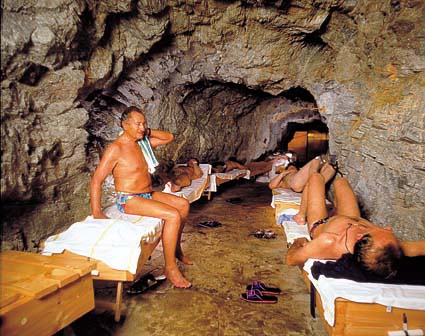
Gasteiner Heilstollen
Spas in the Bad Gastein area of Austria have been known for their health benefits since Roman times - while the U.S. EPA didn't discover radon as a threat until 1984. Note that the level in the "healing gallery" is 1,000 times the "fix it" level of the EPA.
*************************** THIS ***************************
In the Healing Gallery in Gastein deep down in the Radhaus Mountain, there is a worldwide unique healing climate to be found: Because of the air, which contains radon and temperatures of 37 to 41.5 degrees, and a relatively high humidity of between 70 and 100%, your body will refill itself naturally with vitality and strength. Muscles and joints relax as the mountain gives out new energy.
The Healing Gallery is Gastein is the most effective treatment method in Gastein and is probably the most effective natural healing method for treating rheumatic illnesses.
The Natural Healing Power:
- High radon content (up to 4.5 NanoCurie per litre of air in the Gallery)
- Damp warmth (air temperature ranges from 37-41.5 degrees Celsius and relatively high air humidity of 70/100%).
- Speleotherapy conditions (completely pure, dust free, allergy free, and practically bacteria free air, healing aerosol, negative ions)
[above copy taken from http://www.gastein.com/en-gesundheit-heilstollen.shtml]
************************* OR THIS *************************
EPA Recommends:
- If you are buying a home or selling your home, have it tested for radon.
- For new homes, ask if radon resistant construction feature(s) have been used.
- Fix the home if radon level is 4 picocuries per liter (pCi/L) or higher.
- Radon levels less than 4 pCi/L still pose a risk, and in many cases may be reduced.
- Take steps to prevent device interference when conducting a radon test.
[above copy taken from www.epa.gov/iaq/radon/pubs/hmbyguid.html]

Sunday, February 7, 2016
Home Is Where the Radiation Is
Table 11 – Chernobyl Cs 137 Burden in Various Areas
vs. Natural Background
|
|
Location
|
Range (Bq/m^2)
|
European Cs 137 contamination outside former
USSR
|
20,000 to 23,000
|
Cs 137 contamination inside former
USSR
|
40,000 to 5,000,000
|
Natural radionuclides in soil of above
areas
|
177,000 to 6,500,000
|
Source: Table 2 in 1997 statement by
U.N. Scientific Committee on the Effects of Atomic Radiation (UNSCEAR) member
Zbigniew Jaworowski
|
|
From Table 11, radon is apparently the dominant source of background radiation. As pointed out earlier, it has not always been considered to be such, as residential radon seems not to have existed until December 1984, when a nuclear worker set off radiation alarms on his way into the Pennsylvania Limerick power plant. A subsequent investigation showed that the residential radon level in the Reading Prong area of Pennsylvania and New Jersey exceeded the level found in many mines. Always quick with a horror story, the EPA "found" this new "danger" to millions of citizens and gleefully reported that as many as 20,000 lung cancer deaths in the United States are caused by residential radon. Perhaps someone at the EPA should have been reading a certain $36 per year newsletter.
Petr Beckmann was well aware of this noble gas situation, as evidenced by 106 different mentions of radon in his newsletter Access to Energy from September 1979 through June 1992. [Now edited by Dr. Arthur Robinson, President and Research Professor, Oregon Institute of Science and Medicine, Box 1250, Cave Junction, OR 97523. Back issues, twenty-one-year CD-ROM, and index available.]
Professor Beckmann was wise enough not to condemn the radon levels out of hand, but he took the bureaucrats to task for their double standard: One hand of government was tightening industrial radioactive emission standards to ridiculously low levels, while the other hand was encouraging/demanding that homeowners modify their homes to the point where radon doses to the average citizen were hundreds - if not thousands - of times greater than the levels dictated to nuclear workers. Here is an example from the November 1983 edition of his newsletter - prior to the EPA's "discovery" of residential radon:
"Although radon exposures of the public are regularly hundreds and even thousands of times higher than from nuclear power operations, that alone may not be cause for alarm. Our purpose here is not to scare readers with the dangers of radon, but to point out the inconsistency of the media and of the politicians bent on pleasing them."
When it came to radon, one might ask about the government's myopia for so many years. Well, one might also remember that during this period we were having one of our regularly scheduled energy crises and were being urged to seal up our residences and commercial buildings. (Anyone born before 1960 should surely remember Carter's "thermostat cops.") Without ventilation, the heavy gas, almost eight times heavier than air, seeps into basements or lower floors with additional amounts coming from unvented or poorly vented natural-gas heaters. There appears to have been a contest between which "crisis" was more important - energy or radiation. Energy shortage was first out of the gate, but it's radiation coming down the homestretch.
Saturday, February 6, 2016
Radon: Scourge or Blessing for Mankind?
Government was tightening industrial radioactive emission standards to ridiculously low levels, while demanding that homeowners modify their homes to the point where radon doses to the average citizen were hundreds of times greater than the levels dictated to nuclear workers.
Radon is the heaviest of the "noble gases," so named because it - like its cousins neon, argon, krypton, and xenon - does not react with other elements to form compounds. It is radon's "nobility" that minimizes its effects on the body, since it is mostly a transient that is breathed in and then expelled without any chemical reaction taking place. When radon decays in the body, however, it spawns a series of short half-life progeny that are not only chemically reactive with tissue, but are - as we would suspect from their half-lives - also highly radioactive.
[When uranium decays (which isn't very often with a half-life of 4.5 billion years), the products of the decay go through four more stages (taking a couple of million years) until radium is formed. With a half-life of 1,600 years, radium 226 decays into radon gas with a half-life of 3.8 days. The daughters of radon are polonium 218, lead 214, bismuth 214, polonium 214 - and a couple of others. The aforementioned have very short half-lives and are therefore highly radioactive.]
Hazard to Miners?
For years, radon has been thought to be a hazard to miners, and a special confusing unit of activity - the Working Level (WL) - was derived to measure the danger. [One WL is the activity of air containing 100 pCi (3.7 Bq) of radon in equilibrium with its daughters (which, by the way, virtually never happens in the real world) per liter of air. For an approximation, a Working Level Month (WLM) is equivalent to a one-time whole body dose of about 300 mrem (0.3 cGy).]
Recently, however, as evidence of radiation hormesis has emerged, the jury is back out to deliberate a reconsideration of radon's guilt. It is now recognized that other carcinogens - in particular, the particulates suspended in the air of all mines and, more recently, the fumes from diesel engines - were present, but never considered. Radon was assumed to be the carcinogenic culprit, a theory that appears now to be based on flimsy circumstantial and anecdotal evidence.
A related re-evaluation of lung cancer in the Joachimsthal mining community [a famous mine in Czechoslovakia] noted that victims were invariably "pensioners," i.e. miners (not their unexposed, above-ground cohorts) who had made it to a retirement age, which was about ten years longer than their life expectancy. One might easily speculate that the cancer was caused by microscopic dust lodged in the lungs, and the miners' long lives a beneficial product of radon gas. [One of Europe's most famous health spas is Bad Gastein near Salzburg, Austria, which advertises "air with the highest radon content in Europe." The activity of its water is noted in Table 6, in this blog's entry on Monday, January 25, "Specific Activities."]
There has also been a piece of the puzzle right under our noses.
Radon gives its dose of mixed radiation primarily to the bronchial epithelium (fancy scientific words for "windpipe"), hence one would expect cancers caused by radon to be concentrated in this area. Au contraire! The miners' cancers are deep in the lungs [Nobel Laureate Rosalyn Yalow, Radiation and Society, Interdisciplinary Science Reviews, 16, 4, 1991], similar to the cancers caused by the South African amphibole-type asbestos [not to be confused with the common, domestic serpentine type of asbestos, which has not been shown to cause disease], used in ships because of its resistance to brine, acids, and oils.
It is difficult not to see the parallel between non-degradable asbestos fibers in the lungs and non-soluble silica particulates found in most mining environments.
Wednesday, February 3, 2016
You Can Run, But You Can't Hide
If an increase in low-level background radiation caused any problems, decades of anecdotal evidence would have made Denver a ghost town.
No one escapes radiation. As mentioned earlier, the average person receives 15,000 "hits" each second, while a medical X-ray may easily score some 100 billion cellular incidents. [Risk of Nuclear Power by Bernard L. Cohen, University of Pittsburg professor. You can read the entire article at http://www.physics.isu.edu/radinf/np-risk.htm.]
Those who say that "it takes only one gamma ray to cause cancer" may be technically correct, but they neglect to mention a small statistical detail: The odds against any particular gamma ray causing cancer in an affected cell are 1 out of 30,000,000,000,000,000. (That's 30 quadrillion, or 30 x 10^15, to one.) Besides, hormesis evidence indicates that the gamma ray of concern is more likely to prevent cancer than to cause it.
Before defining the units used to measure radiation exposure, you may recall we used the SXR (shoe X-ray) as a yardstick to compare the dangers posed by various radiation sources. As you may have guessed, the SXR is not exactly a reference unit recognized by the scientific community. A more convenient benchmark would be the average background exposure that we receive from the various natural and man-made sources. But, as we'll see, this "natural background" value varies by a factor of a hundred or so in different locales on planet Earth - almost all of which is the fault of nature, not man. Still, it would be desirable to reference other levels of radiation to some normal amount; so we'll arbitrarily use, as a definition of "natural background," the exposure to the average U.S. citizen - previously mentioned to be 300 mrem from natural sources and 63 mrem from man-made (mostly medical) origins.
Until the twentieth century, the average background dose of radiation for a human being had continually decreased over our specie's existence because of the slow decay of the primordial radionuclides such as thorium 232, uranium 238, and potassium 40. So what happened during the 1900s that turned the curve upward?
Most people would answer (a) fallout from atom/hydrogen bomb testing, and (b) nuclear power plants. Nice try, but no cigar. Bomb tests did inject huge amounts of highly radioactive materials into the atmosphere, where most decayed to safe levels within ten days of testing. Other longer-half-life isotopes from fallout caused a temporary worldwide increase of background radiation in the neighborhood of 1% to 4% depending mainly on location. [The one of primary concern being strontium 90 with a half-life of twenty-nine years and a propensity to replace calcium in bones.] Today it amounts to less than 1/1000 of the average background level. As mentioned, there has been only a single "fall-out fatality" from atom/hydrogen bomb testing, which occurred on the misnamed Lucky Dragon. While anti-nuclear statistics have killed off many (theoretical) thousands in their quest for an atomic scapegoat, our inaccurate friends have been unable to directly attribute any other death or injury to radiation from fallout, except as a statistical article-of-faith based on the discredited LNT and "collective dose" theories.
Nuclear power plants, on the other hand, have known emissions of radioactive products such as xenon (a non-reactive "noble" gas), but these are so low in practice as to be immeasurable. It is calculated that the average U.S. resident receives a dose considerably less than 1 mrem from all nuclear power plants combined - again, as with fallout, about 1/1000 of the normal background radiation. For those truly troubled by potential radiation exposure, it is not necessary to avoid being in the vicinity of power plants, but you might want to stay away from the U.S. Capitol building and Grand Central Station, both of which emit considerably more radiation than would be legal for any U.S. nuclear power plant to emit.
So where did the increase come from?
If we are to believe a report from the National Academy of Sciences Committee on the Biological Effect of Ionizing Radiation (BEIR IV), most of the increase came from weather-stripping storm doors, and polyethylene wrapping of new homes. Not that any of these products was unusually radioactive, but because they made houses "tight," thus causing radon gas, which bubbles up from decaying radionuclides in the soil, to be trapped in the living areas. This, they calculate, amounts to 200 mrem per year - unless, as well shall see, you are fortunate enough to get more.
The second largest component of the increase is from X-rays and nuclear medicine. The averages used for medically related exposures are somewhat misleading, however, since they range from a 1-mrem dental X-ray to about 100,000 mrem (100 cGy) for a thyroid ablation. [In 1979, the University of Michigan outfitted the husband of a woman undergoing radioactive iodine diagnosis with a dosimeter. They found that he received a dose of 2,500 mrem(!) during their vacation - which would no doubt cause the EPA to forbid them to sleep together.]
In other words, most people fall well below the combined 53 mrem medical dose, while a few have relatively massive doses. As the evidence section will show, even these huge doses of X-rays or medical radioisotopes produce no measurable increase in cancer - and indeed are seen to have a hormetic effect in those cases where low-level effects were investigated.
Finally, about 10 mrem comes from consumer products such as smoke detectors, television receivers, and tritium watch dials. None comes from the process of food irradiation for a very simple reason: The process physically can not make the food radioactive. Does having an X-ray make you radioactive? Same thing.
Table 9 gives a breakdown of sources in the United States, according to the BEIR committee. Obviously, for most of us, our largest dose of radiation comes from natural sources. The exposures from "man-made" sources are almost entirely voluntary. If you don't want to have a dental X-ray, then don't. If your doctor wants to check your thyroid function using iodine 131, tell him, "No thanks, I'll just feel awful for the rest of my life." If you don't want a smoke detector in your home, then don't buy one; burn your family up if that's your preference. Don't watch television or use a computer terminal.
But to avoid the natural background radiation, you need to take some pretty serious steps. Moving to Antarctica or living underwater in a nuclear submarine are your best bets. Or you could also move from high-background-radiation Colorado (with a low age-adjusted cancer death rate) to the low-background-radiation southeastern and eastern coastal states (with high age-adjusted cancer death rates). Then again, you might move out of your high-radon-exposure home in the Reading Prong of Pennsylvania to an area with a lower radon dose rate... but with a higher lung cancer toll.
You're not going to do any of these things. Why? Because if an increase in low-level background radiation caused any problems, we would see evidence - in the form of dead bodies. Decades of anecdotal evidence would have made Denver a ghost town, and Leadville, Colorado - the city with the highest altitude, therefore the most cosmic radiation - would have only monuments to its former short-lived citizens. But the only people who think that there is any such danger are the regulators, anti-nuclear activists, "environmentalists," and government scientists - who cling to the Linear No-Threshold (LNT) Hypothesis. We will be discussing this concept as applied to ionizing radiation, but since our government is so concerned about the doses we receive in this country, let's see what the situation would be if we lived with the background radiation experienced by fellow human beings who live in places outside the United States.
Remember, the average background radiation in the United States is 300 mrem (.3 cGy) plus an average of 63 mrem, primarily from medical sources. And remember that the radiation rules-makers are out to regulate public exposures down to a single mrem (.001 cGy); they intend to put a limit on public exposures at 100 mrem (0.1 cGy).
No one escapes radiation. As mentioned earlier, the average person receives 15,000 "hits" each second, while a medical X-ray may easily score some 100 billion cellular incidents. [Risk of Nuclear Power by Bernard L. Cohen, University of Pittsburg professor. You can read the entire article at http://www.physics.isu.edu/radinf/np-risk.htm.]
Those who say that "it takes only one gamma ray to cause cancer" may be technically correct, but they neglect to mention a small statistical detail: The odds against any particular gamma ray causing cancer in an affected cell are 1 out of 30,000,000,000,000,000. (That's 30 quadrillion, or 30 x 10^15, to one.) Besides, hormesis evidence indicates that the gamma ray of concern is more likely to prevent cancer than to cause it.
Before defining the units used to measure radiation exposure, you may recall we used the SXR (shoe X-ray) as a yardstick to compare the dangers posed by various radiation sources. As you may have guessed, the SXR is not exactly a reference unit recognized by the scientific community. A more convenient benchmark would be the average background exposure that we receive from the various natural and man-made sources. But, as we'll see, this "natural background" value varies by a factor of a hundred or so in different locales on planet Earth - almost all of which is the fault of nature, not man. Still, it would be desirable to reference other levels of radiation to some normal amount; so we'll arbitrarily use, as a definition of "natural background," the exposure to the average U.S. citizen - previously mentioned to be 300 mrem from natural sources and 63 mrem from man-made (mostly medical) origins.
Until the twentieth century, the average background dose of radiation for a human being had continually decreased over our specie's existence because of the slow decay of the primordial radionuclides such as thorium 232, uranium 238, and potassium 40. So what happened during the 1900s that turned the curve upward?
Most people would answer (a) fallout from atom/hydrogen bomb testing, and (b) nuclear power plants. Nice try, but no cigar. Bomb tests did inject huge amounts of highly radioactive materials into the atmosphere, where most decayed to safe levels within ten days of testing. Other longer-half-life isotopes from fallout caused a temporary worldwide increase of background radiation in the neighborhood of 1% to 4% depending mainly on location. [The one of primary concern being strontium 90 with a half-life of twenty-nine years and a propensity to replace calcium in bones.] Today it amounts to less than 1/1000 of the average background level. As mentioned, there has been only a single "fall-out fatality" from atom/hydrogen bomb testing, which occurred on the misnamed Lucky Dragon. While anti-nuclear statistics have killed off many (theoretical) thousands in their quest for an atomic scapegoat, our inaccurate friends have been unable to directly attribute any other death or injury to radiation from fallout, except as a statistical article-of-faith based on the discredited LNT and "collective dose" theories.
Nuclear power plants, on the other hand, have known emissions of radioactive products such as xenon (a non-reactive "noble" gas), but these are so low in practice as to be immeasurable. It is calculated that the average U.S. resident receives a dose considerably less than 1 mrem from all nuclear power plants combined - again, as with fallout, about 1/1000 of the normal background radiation. For those truly troubled by potential radiation exposure, it is not necessary to avoid being in the vicinity of power plants, but you might want to stay away from the U.S. Capitol building and Grand Central Station, both of which emit considerably more radiation than would be legal for any U.S. nuclear power plant to emit.
So where did the increase come from?
If we are to believe a report from the National Academy of Sciences Committee on the Biological Effect of Ionizing Radiation (BEIR IV), most of the increase came from weather-stripping storm doors, and polyethylene wrapping of new homes. Not that any of these products was unusually radioactive, but because they made houses "tight," thus causing radon gas, which bubbles up from decaying radionuclides in the soil, to be trapped in the living areas. This, they calculate, amounts to 200 mrem per year - unless, as well shall see, you are fortunate enough to get more.
The second largest component of the increase is from X-rays and nuclear medicine. The averages used for medically related exposures are somewhat misleading, however, since they range from a 1-mrem dental X-ray to about 100,000 mrem (100 cGy) for a thyroid ablation. [In 1979, the University of Michigan outfitted the husband of a woman undergoing radioactive iodine diagnosis with a dosimeter. They found that he received a dose of 2,500 mrem(!) during their vacation - which would no doubt cause the EPA to forbid them to sleep together.]
In other words, most people fall well below the combined 53 mrem medical dose, while a few have relatively massive doses. As the evidence section will show, even these huge doses of X-rays or medical radioisotopes produce no measurable increase in cancer - and indeed are seen to have a hormetic effect in those cases where low-level effects were investigated.
Finally, about 10 mrem comes from consumer products such as smoke detectors, television receivers, and tritium watch dials. None comes from the process of food irradiation for a very simple reason: The process physically can not make the food radioactive. Does having an X-ray make you radioactive? Same thing.
Table 9 gives a breakdown of sources in the United States, according to the BEIR committee. Obviously, for most of us, our largest dose of radiation comes from natural sources. The exposures from "man-made" sources are almost entirely voluntary. If you don't want to have a dental X-ray, then don't. If your doctor wants to check your thyroid function using iodine 131, tell him, "No thanks, I'll just feel awful for the rest of my life." If you don't want a smoke detector in your home, then don't buy one; burn your family up if that's your preference. Don't watch television or use a computer terminal.
Table 9
|
|||
Sources of Average Annual Radiation for a U.S.
Citizen
|
|||
Natural
Sources
|
mrem/yr
|
cSv/yr
|
%
Total
|
Radon
|
200
|
0.2
|
55
|
Cosmic*
|
27
|
0.027
|
8
|
Terrestrial
|
28
|
0.028
|
11
|
Internal
|
39
|
0.039
|
11
|
Total Natural
|
300
|
0.3
|
82
|
Man-made
sources
|
|||
Medical X-rays
|
39
|
0.039
|
11
|
Nuclear medicine
|
14
|
0.014
|
4
|
Consumer goods
|
10
|
0.010
|
3
|
Nuclear power
|
< 1 **
|
< 0.001
|
-
|
Fallout
|
< 1
|
< 0.001
|
-
|
Total Man-made
|
63
|
0.063
|
18
|
TOTAL
|
363
|
0.363
|
100
|
* Doubles for every 6000 feet in
altitude.
|
|||
** The symbol “<” means “less than.”
|
|||
Source: Department of Energy Report
YMP-0337 from BEIR IV. Available in its entirety at http://www.ocrwm.doe.gov/factsheets/pdf/ymp0337rev1.pdf
|
|||
But to avoid the natural background radiation, you need to take some pretty serious steps. Moving to Antarctica or living underwater in a nuclear submarine are your best bets. Or you could also move from high-background-radiation Colorado (with a low age-adjusted cancer death rate) to the low-background-radiation southeastern and eastern coastal states (with high age-adjusted cancer death rates). Then again, you might move out of your high-radon-exposure home in the Reading Prong of Pennsylvania to an area with a lower radon dose rate... but with a higher lung cancer toll.
You're not going to do any of these things. Why? Because if an increase in low-level background radiation caused any problems, we would see evidence - in the form of dead bodies. Decades of anecdotal evidence would have made Denver a ghost town, and Leadville, Colorado - the city with the highest altitude, therefore the most cosmic radiation - would have only monuments to its former short-lived citizens. But the only people who think that there is any such danger are the regulators, anti-nuclear activists, "environmentalists," and government scientists - who cling to the Linear No-Threshold (LNT) Hypothesis. We will be discussing this concept as applied to ionizing radiation, but since our government is so concerned about the doses we receive in this country, let's see what the situation would be if we lived with the background radiation experienced by fellow human beings who live in places outside the United States.
Remember, the average background radiation in the United States is 300 mrem (.3 cGy) plus an average of 63 mrem, primarily from medical sources. And remember that the radiation rules-makers are out to regulate public exposures down to a single mrem (.001 cGy); they intend to put a limit on public exposures at 100 mrem (0.1 cGy).
Subscribe to:
Posts (Atom)